
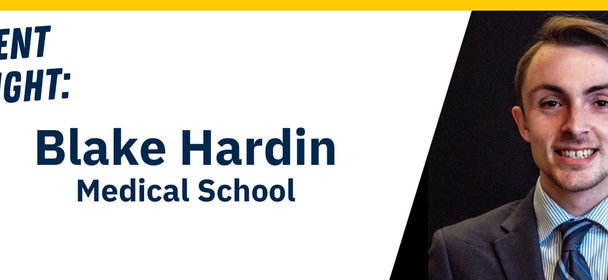
The Center for Interprofessional Education works with undergraduate, graduate and professional students from all ten health science schools across the University of Michigan. Get to know the remarkable students who are learning to work in interprofessional teams while earning their Michigan degree.
Blake Hardin (he/him) is a second-year medical student at the University of Michigan Medical School who serves as a co-chair of the Center for Interprofessional Education’s Student Advisory Committee. Inspired by his experience as a pediatric health care patient, he is pursuing a medical career and wants to advocate for students to engage in interprofessional education as a way of providing the best patient care possible. Read on to learn about Blake, his experiences with IPE and who inspires him.

What drew you to your field of study?
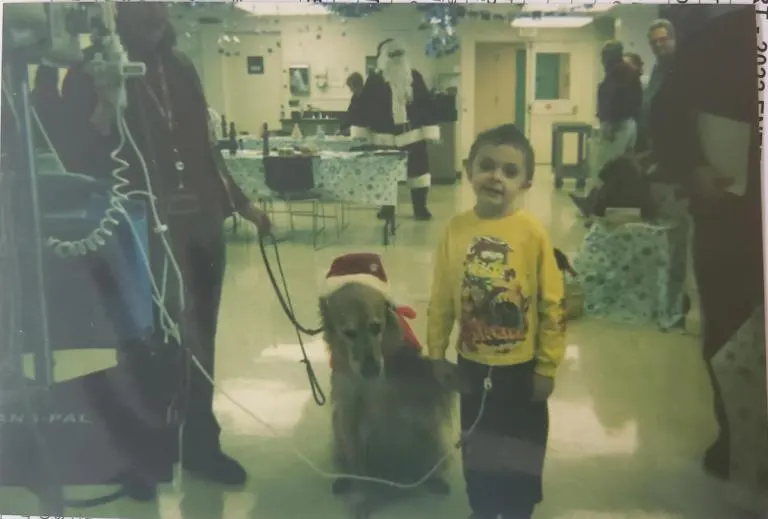
Growing up, I had significant health challenges that were life-threatening and resulted in me spending much of my childhood in and out of the hospital. My entire care team treated me and my family like their own family, caring for me with compassion, dignity and respect.
I developed a chronic illness as a result of my health challenges, which granted me a unique perspective of the hardships that people with disabilities and chronic illnesses — including many friends and family members — face when attempting to receive effective and compassionate health care and find health care providers that truly believe and listen to their individual stories. Therefore, I wanted to become a physician due to my personal experience within health care as a patient. I want to advocate for my patients, especially those with disabilities and chronic illnesses, by merging science with empathetic patient care.
Why did you decide to attend the University of Michigan?
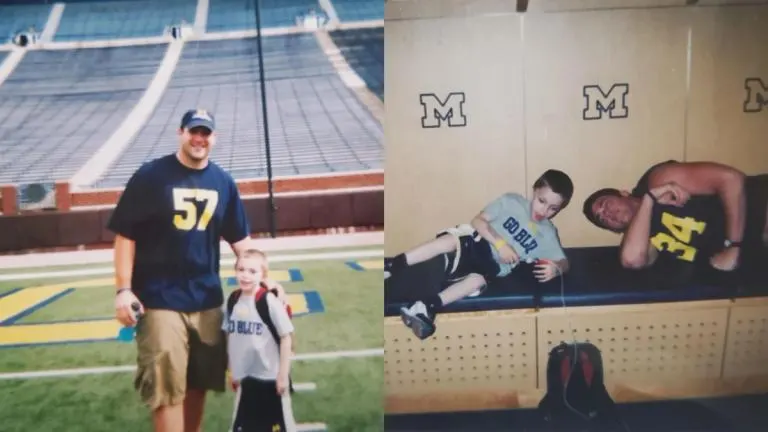
One of the many reasons I decided to attend the University of Michigan is that the Pediatric Surgery Department saved my life when I was young and modeled the type of physician I want to become, regardless of specialty. Additionally, I decided to attend U-M because of early clinical experience, world-renowned research opportunities, a welcoming culture, extensive opportunities to get involved with disability advocacy, close proximity to my family and support from scholarships and grants.
Please describe your involvement in the Center for IPE.
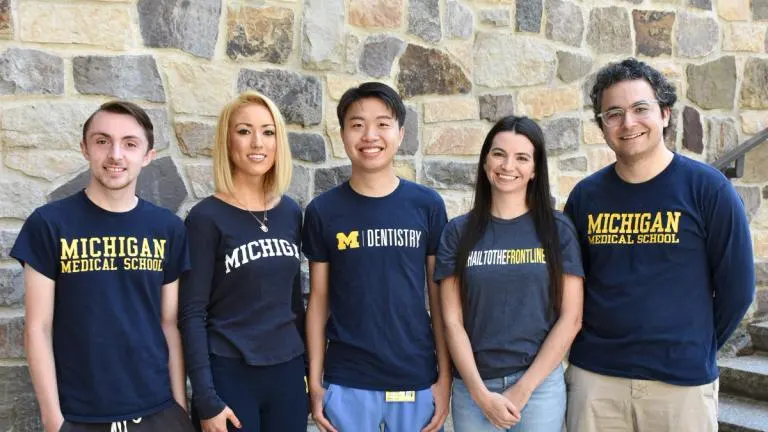
I wanted to advocate for students when it comes to engaging in IPE experiences that are effective and engaging, as well as help connect students to IPE initiatives. Therefore, I joined as one of the co-chairs of the Student Advisory Committee of the Center for IPE, representing the Medical School. We serve as a means to communicate student perspectives related to IPE to faculty, deans, and the health science schools. The overarching charge of the Student Advisory Committee is to increase and promote active and meaningful participation in IPE among students, with the ultimate goal of ensuring students are prepared to work in collaborative environments.
I also wanted to amplify the voices of patients with chronic illnesses and give students the opportunity to learn about their health care journeys while working in interprofessional teams to become more compassionate and empathetic health care providers. To do this, I became the co-student liaison for the Longitudinal Interprofessional Family-Based Experience (LIFE) program to help students gain these experiences.
Why is interprofessional education important to you?
I was extremely fortunate to have a multidisciplinary care team consisting of physicians, nurses, dieticians, pharmacists, and social workers. I didn’t understand it much when I was young, but when I look back at the care I received (and the care I still receive), it inspires confidence that I was receiving the best possible care and that health care professionals cared enough about me and my family to find time out of their extremely busy schedules to talk about me and my care plan. The way they work together as a team to coordinate the care for children with medically complex conditions inspires me as a future physician to foster a cohesive environment like this.
I also now realize that the level of interprofessional care I received is, unfortunately, not the norm. I have friends with disabilities and chronic illnesses who have felt that their needs have been neglected and not fully addressed by their care team because they have not communicated effectively with each other and utilized the different perspectives of other health care professionals. This is why IPE is important to me: improving health care outcomes and ensuring patient and family needs are heard and addressed, especially for those with disabilities and chronic illnesses.
What do you want your fellow students to know about IPE?
I only recently started clinical rotations, but even with my relatively short time in the clinical space, I view health care and interactions between health care professionals differently. I recently witnessed a very tense interaction between a physician and a nurse due to a breakdown in effective communication. While this partially stemmed from both individuals being frustrated while already having difficult days, this represents a need for further interprofessional education. Being involved with IPE has provided me with a high standard of interprofessional communication and teamwork that I will strive for as a future physician.
Who or what has inspired you on your educational journey?
Throughout my educational journey, I have had many wonderful mentors who have inspired me to improve and continuously become an effective, compassionate physician. However, my first mentors who inspired me to pursue medicine were the pediatric surgeons at Mott Children’s Hospital — Dr. Peter Ehrlich and the late Dr. Daniel Teitelbaum — who saved my life. At a young age, they defined what it meant to be a physician: someone immensely skilled but, most importantly, compassionate and empathetic. They treated my family and me like I was part of their family. I was not a patient with a laundry list of complex medical conditions but a normal child who needed to be treated with kindness, playfulness and respect. I wish to embody all of these qualities as a future physician.
What is your ultimate career goal after graduation?
Hopefully, I will be a physician (haha). Not sure of my specialty choice (maybe something within pediatrics?), but I would like to be an academic clinician/researcher/teacher.
What do you like to do for fun outside of school?
I’m a big gamer, so whenever I get a chance, I love to play video games on my PlayStation 5. Right now, I’m working on finishing the new Spider-Man 2.
I also love to sing, so I try to do this in any capacity, whether it be as part of the Auscultations medical school a capella group, the Smoker and even karaoke.
I am also fortunate to live close to home, so I regularly see my parents to hang out and usually watch movies together.
What is your favorite spot on campus or place in Ann Arbor?
On campus, my favorite place is the Medical Student Lounge (Slounge) in the Taubman Health Sciences Library. It’s a place where I can catch up with friends and get destroyed at ping pong.
In Ann Arbor, it’s hard to decide, but I love wandering around downtown Ann Arbor, trying new restaurants and coffee shops, having a picnic at the Arb or tubing along the Huron River!